Does Swimming Build Muscle? A Complete Guide

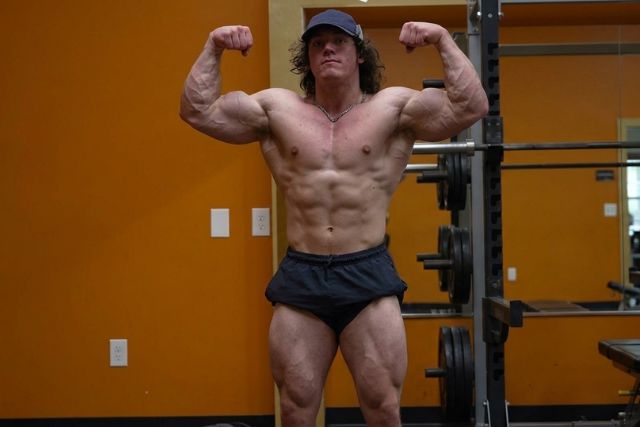
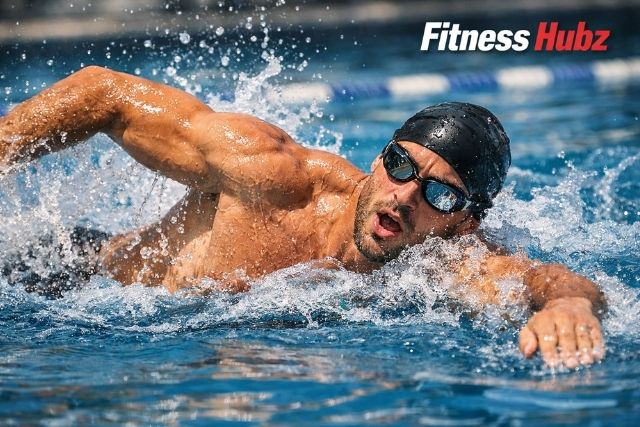
You have probably seen the Olympic swimmers, they glide through the water in seconds, and they have a good physique. The question that comes to mind does swimming build muscle effectively? The answer is yes, but swimming builds you muscle differently than traditional weight lifting.
Swimming offers a unique way to do muscle development, along with your cardiovascular health, all this while protecting your muscles from excessive stress. Whether you have just started swimming or are a secondary athlete, learning does swimming build muscle can transform your journey.
Does Swimming Build Muscle?
Does swimming build muscle the same way weight lifting does? No, exactly not that way. It builds muscle of a different way. When you swim, your full body engages in the process. Swimming regularly makes small tears in the muscle fibres that repair during the recovery process. As these fibers repair during recovery, they grow back stronger and more defined. In that process, you develop lean muscle mass rather than significant bulk.
The beauty of water-based training is its progressive nature. As your swimming capacity increases, it builds muscle endurance, strength, and definition. This process directly happens to muscle recovery, where muscles get repaired or strengthened over time by doing the same thing.
Muscles Targeted by Swimming
Does swimming build muscle throughout the entire body? The answer is yes. Unlike the isolated movements that target specific muscles of the body, swimming engages every muscle group. This makes swimming one of the most extensive workouts available.
Upper Body Muscles
- Lats: These large muscles of the back power your pulling and help you create a V-shape torso.
- Delts: Shoulder muscles that stabilize your movement and move each stroke forward.
- Chest: Chest muscles are engaged during the pulling movement and recovery phases.
- Arms: Arms muscles that drive the power to push the water.
- Traps: Upper back muscles supporting posture and arm movement.
Lower Body Muscles
- Glutes: Glutes provide the hip extension and stability during the kicks.
- Quadriceps: Front thigh muscles powering flutter and dolphin kicks.
- Hamstrings: Back thigh muscles are essential for breaststroke and freestyle.
- Calves: Lower leg muscles that add propulsion to every kick.
Core Muscles
Your abdominal muscles, obliques, and lower back are the foundation of swimming efficiency. These core muscles provide the thrust, rotation, and balance necessary for executing a proper stroke. A strong core translates to faster swimming and better overall body control.
How to Maximize Muscle Building Through Swimming?
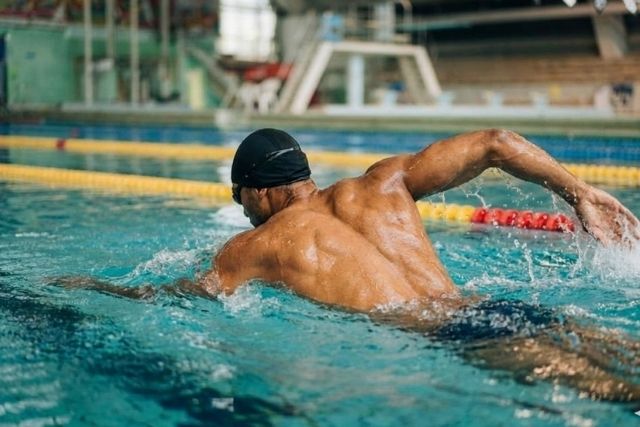
Does swimming build muscle automatically, or do you need a strategic approach? While any consistent swimming builds some muscle, optimizing your technique increases results dramatically.
Develop a Structured Training Plan
Work with a qualified coach to create a progressive program aligned with your specific goals. Your plan should address both pool workouts and complementary dry land training. Smart programming prevents burnout, reduces injury risk, and keeps you motivated long term.
Progress Gradually and Safely
Increase your swimming distance by no more than 10% weekly. This gradual progression allows your muscles to adapt without overtraining. Rushing this process invites injury and difficulty that disturb your progress.
Perfect Your Technique
Proper form ensures you’re activating the correct muscles at optimal times. Even a few sessions with an experienced coach can identify technique flaws holding back your strength gains. Efficient strokes build muscle faster than inefficient ones.
Incorporate Variety and Intensity
Mix different strokes, speeds, and intervals to challenge your muscles in diverse ways. Freestyle builds different muscles than breaststroke, and sprints create different adaptations than distance swimming. This variation prevents plateaus and maintains steady progress.
Add Resistance Equipment
Does swimming build muscle faster with training tools? Absolutely. Paddles, fins, pull buoys, and resistance bands increase water resistance, forcing your muscles to work harder. Introduce these tools gradually to avoid overuse injuries.
Swimming vs Weight Lifting
Does swimming build muscle effectively as weight lifting? The answer depends on your goals. Swimming build a lean muscle mass with good cardiovascular health. Meanwhile, weight lifting builds larger and more bulky muscles with less cardiovascular benefit.
Advantages of swimming include:
- Zero joint impact, reducing injury risk dramatically
- Full-body engagement in every session
- Combined cardio and strength training
- Enhanced flexibility and range of motion
- Continuous calorie burn during and after workouts
Although if you want a strength and good cardiovascular health. Then, swimming with resistance training delivers optimal results. Many advanced athletes use this method to build strength and cardiovascular health, also.
The Low-Impact Advantage
Does swimming build muscle without damaging your joints? This question matters especially as we age or recover from injuries. Swimming’s happiness eliminates 90% of your body weight, allowing intense muscle work without the pounding stress of running or heavy lifting.
This low-impact nature makes swimming ideal for:
- Older adults combating age-related muscle loss
- People with arthritis or joint problems
- Athletes recovering from injuries
- Anyone seeking sustainable long-term fitness
Regular swimming helps delay muscle degeneration, keeping you mobile, independent, and strong well into your later years, a benefit that extends far beyond aesthetics.
Nutrition and Recovery
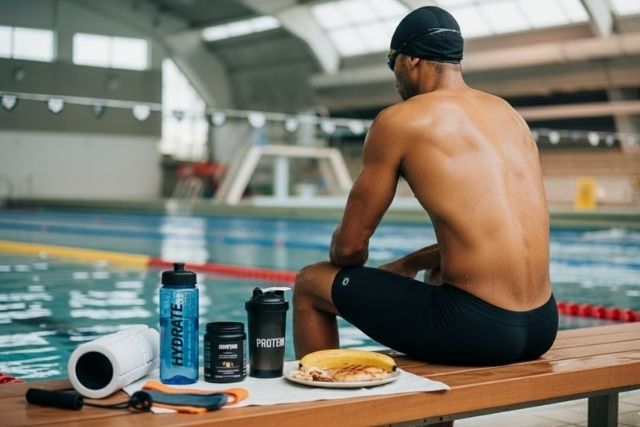
Without a proper diet, you will not be able to build the muscles properly. Our diet has the building blocks that our muscles need for recovery and to get stronger.
- Protein intake is very important for muscle growth. Eat about 0.8 g to 1.2 g of protein per pound of your body weight. Consume protein after 30 to 60 minutes of your workout for muscle recovery.
- Hydration is important for the functioning of muscles. Remaining hydrated during the workouts prevents you from fatigue.
- Quality sleep is when actual muscle growth occurs. Prioritize 7-9 hours nightly, especially as training volume increases.
Final Thoughts
Does swimming build muscle? Absolutely yes, and it does so in a uniquely sustainable, joint-friendly way that supports lifelong fitness. Swimming develops lean, strong muscles throughout your entire body while simultaneously boosting cardiovascular health, flexibility, and endurance.
Whether you’re 25 or 75, swimming offers a proven path to building functional strength that enhances daily life. The key lies in consistent training, proper technique, water-based nutrition, and sufficient recovery.